Paul Foster · 5 October 2026
Genealogical Records Reveal Family Legacies Tied to Specific Oak Groves Across Generations
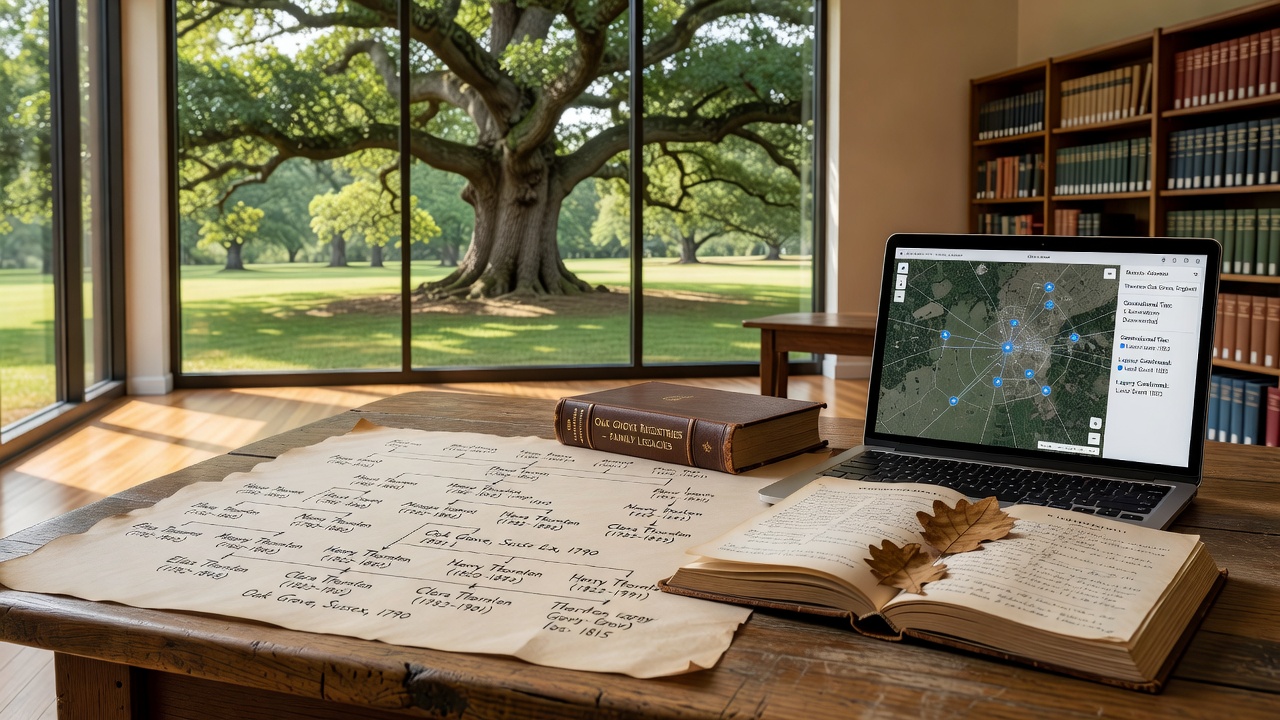
Genealogical records from multiple regions demonstrate consistent patterns where specific families maintained documented ties to individual oak groves over several centuries, and these connections appear through land deeds, wills, and census data that cross-reference family names with precise geographic locations. Researchers analyzing digitized archives note that such linkages often trace back to 17th and 18th century settlements where oak stands served as boundary markers or resource sites for timber and acorns.
Patterns in Archival Documentation
Land grant records from colonial-era collections reveal that particular surnames recur alongside descriptions of oak groves in property surveys, while later probate documents show inheritance clauses that specify access rights to those same stands for fuel, building materials, or mast for livestock. Data compiled by regional historical societies indicates that these references persist across generations even as ownership transferred through marriage or sale, suggesting deliberate preservation of both lineage and location details.
Cross-referencing with pollen core samples from nearby sediment layers provides additional confirmation that oak populations remained stable in areas tied to documented family holdings, and this stability aligns with periods when those families held title according to tax rolls. Observers note that such correlations strengthen when multiple record types converge on the same grove coordinates.
Case Examples from North American and European Sources
One set of 19th century deeds from the American Midwest lists repeated transfers within extended family networks that explicitly reference a cluster of white oaks as a fixed landmark, and similar phrasing appears in Canadian land patents from the same era where oak groves marked homestead boundaries in Ontario townships. Researchers at institutions tracking transatlantic migration patterns have matched passenger lists to these property entries, showing continuity in family presence near the same trees.
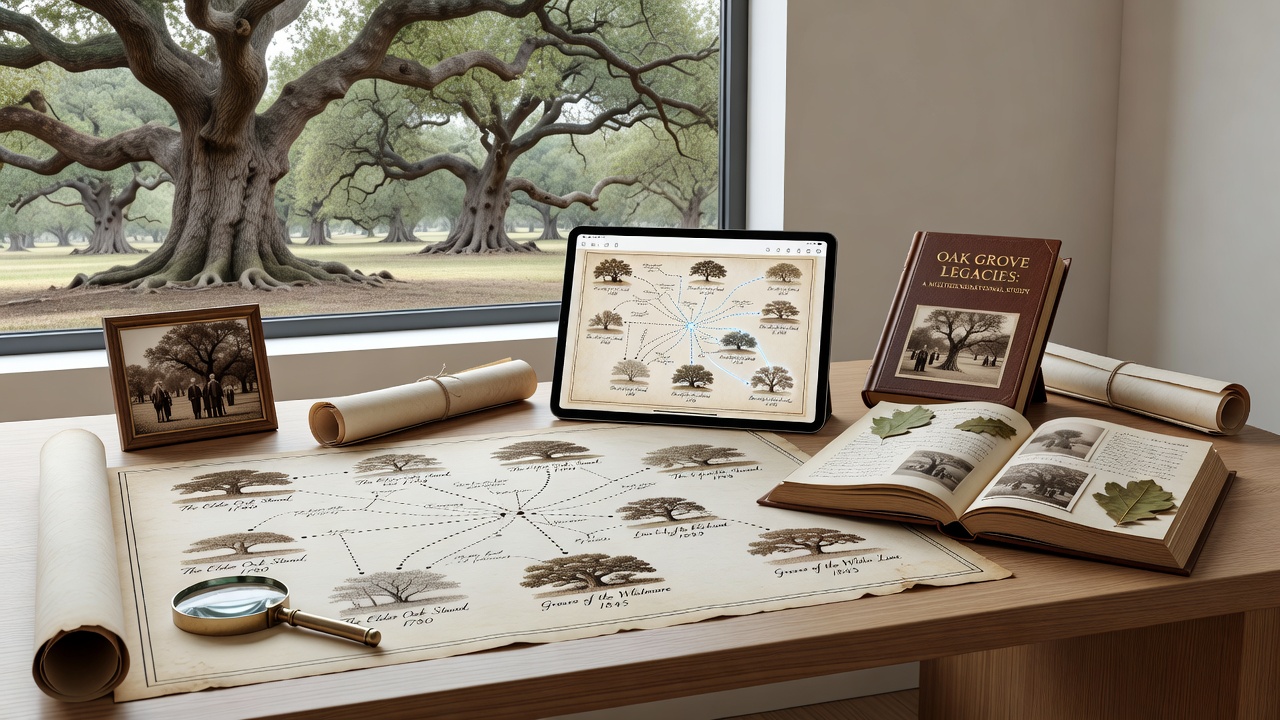
In parts of the United Kingdom and Australia, parish registers and colonial survey maps yield parallel findings, where families maintained rights to harvest from designated oak stands listed in estate settlements. Figures released by national heritage bodies show that such groves often appear in both genealogical databases and forestry inventories under the same historic names, creating traceable threads between human lineages and tree populations.
October 2026 Database Updates
In October 2026, several major repositories completed digitization projects that added previously unavailable 18th century survey maps and family correspondence, and analysts reviewing the new materials identified additional instances where oak grove references served as anchors for multi-generational claims. These updates allow more precise geospatial matching between genealogical entries and current tree stand locations using GIS overlays.
Academic teams combining the fresh records with long-term ecological monitoring data report that groves linked to continuous family documentation exhibit different age structures compared to adjacent unmanaged areas, and this distinction appears in growth ring analyses from sampled trees. The expanded datasets also highlight migration stories where families carried knowledge of specific oak sites to new continents while retaining references in private letters.
Integration with Broader Heritage Research
Studies conducted through university programs in environmental history link these family-grove associations to larger patterns of land stewardship, and government archives in both the United States and Canada supply supporting cadastral maps that reinforce the connections. Those examining the combined evidence observe that oak groves frequently function as stable reference points amid changing administrative boundaries and population shifts.
Further cross-checks with international forestry reports reveal that certain named groves continue to appear in modern conservation inventories under designations first recorded in family deeds centuries earlier. This continuity allows researchers to map legacy claims against present-day vegetation data without relying solely on oral accounts.
Conclusion
Genealogical records establish measurable ties between family lines and individual oak groves through repeated documentary mentions across time, and these ties gain clarity when archival sources merge with ecological sampling and updated digital collections. The October 2026 releases expand the available evidence base, enabling more detailed reconstructions of how specific lineages intersected with fixed landscape features. Such findings rest on convergent data from deeds, maps, and biological records rather than isolated anecdotes.