David Müller · 19 October 2026
How Land Deeds and Shipping Logs Trace Oak Timber Flows to Early Industrial Workshops
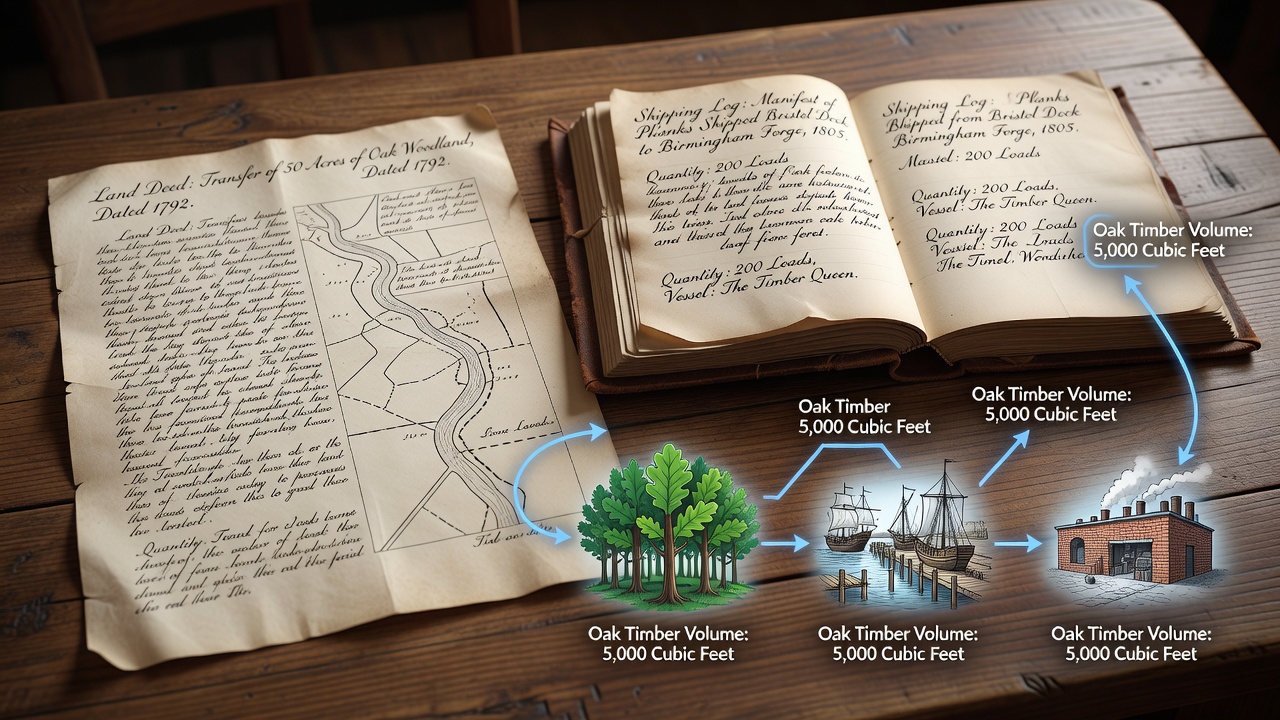
Land deeds and shipping logs form the backbone of efforts to reconstruct oak timber movements during the rise of early industrial workshops, and researchers continue to mine these documents for precise patterns of supply and demand. Archives across multiple continents hold bundles of property transfers that list specific oak stands, their acreages, and the dates when ownership changed hands, which often coincided with large-scale cutting operations. Shipping logs complement those records by noting vessel names, departure ports, cargo volumes measured in board feet or tons, and arrival dates at destinations where sawmills and furniture makers operated.
Land Deeds as Primary Records of Oak Ownership
County courthouses and state repositories preserve thousands of land deeds that detail oak timber sales from the late eighteenth century onward, and these instruments typically include boundary descriptions that reference mature oak groves as landmarks. Surveyors noted tree species and sizes when marking corners, which allows modern analysts to correlate deed language with soil maps and remnant stands. In regions where oak served as the dominant structural timber, deed books show repeated transfers from individual landowners to timber merchants who supplied growing factories, and cross-referencing these entries with tax assessments reveals the scale of annual harvests.
Shipping Logs Documenting Transport Networks
Port authority registers and merchant ledgers record the downstream journey of oak planks and beams, listing quantities loaded at river landings or coastal wharves and the workshops that received them. Captains recorded weather delays, crew sizes, and sometimes the grade of timber, information that helps historians calculate transport costs and seasonal availability. When matched against land deed dates, these logs demonstrate how oak cut in one watershed reached industrial centers hundreds of miles away within weeks, a timeline that shaped production schedules in carriage shops and shipyards alike.
Connecting Deeds and Logs Through Cross-Referencing
Archivists and economic historians combine the two document types by matching seller names on deeds with consignor names on bills of lading, and digital indexing projects have accelerated the process since the early 2000s. One study of mid-Atlantic records found that oak originating from deeds executed in spring reached Philadelphia workshops by late summer, confirming river and coastal routes that avoided overland wagon costs. Similar linkages appear in Great Lakes documentation, where Canadian and American customs entries track oak staves and heading destined for cooperages that supplied brewing and distilling industries.
Case Examples from North America and Europe
Records from the United States National Archives illustrate how oak from the Ohio Valley traveled via flatboats to New Orleans furniture makers, with deed chains showing ownership passing from speculators to sawmill operators in the 1830s. In parallel, Swedish customs ledgers from the same decade list oak balks shipped from Baltic ports to British engineering works, and researchers have aligned those entries with estate inventories that name specific groves. Australian colonial port books from the 1840s further reveal oak imported from North America for railway sleeper production, demonstrating global timber circuits sustained by consistent deed and log trails.

October 2026 brings the scheduled release of an expanded online portal by the Canadian Forest Service that will integrate digitized land patents with port clearance data, allowing queries that span the Great Lakes basin. This update follows earlier releases from European partners and promises to surface previously unlinked oak shipments that fed locomotive and machinery workshops in Ontario and Quebec. Observers note that such tools reduce the time required to trace individual timber lots from stump to finished product from months to hours.
Challenges in Interpretation and Data Gaps
Handwritten entries vary in spelling and measurement units, while missing pages from floods or fires create breaks in chains of custody that researchers must bridge with secondary sources such as insurance claims and newspaper cargo notices. Some deeds omit timber volume entirely, forcing analysts to estimate based on stand density tables derived from later forest surveys. Shipping logs occasionally list only “oak” without distinguishing white from red species, limiting precision when matching to workshop inventories that specify wood properties.
Conclusion
Land deeds and shipping logs together provide a verifiable map of oak timber flows that supplied early industrial workshops, and ongoing digitization efforts continue to refine that map. Cross-referenced datasets from North American and European archives already show consistent seasonal rhythms and route preferences that shaped workshop output. As new portals open in 2026 and beyond, the granularity of these reconstructions will increase, offering clearer pictures of how specific oak groves contributed to the material base of industrialization.