Paul Becker · 2 November 2026
Oak Genetic Mapping Projects Reshape Reforestation Priorities Across Protected Woodlands
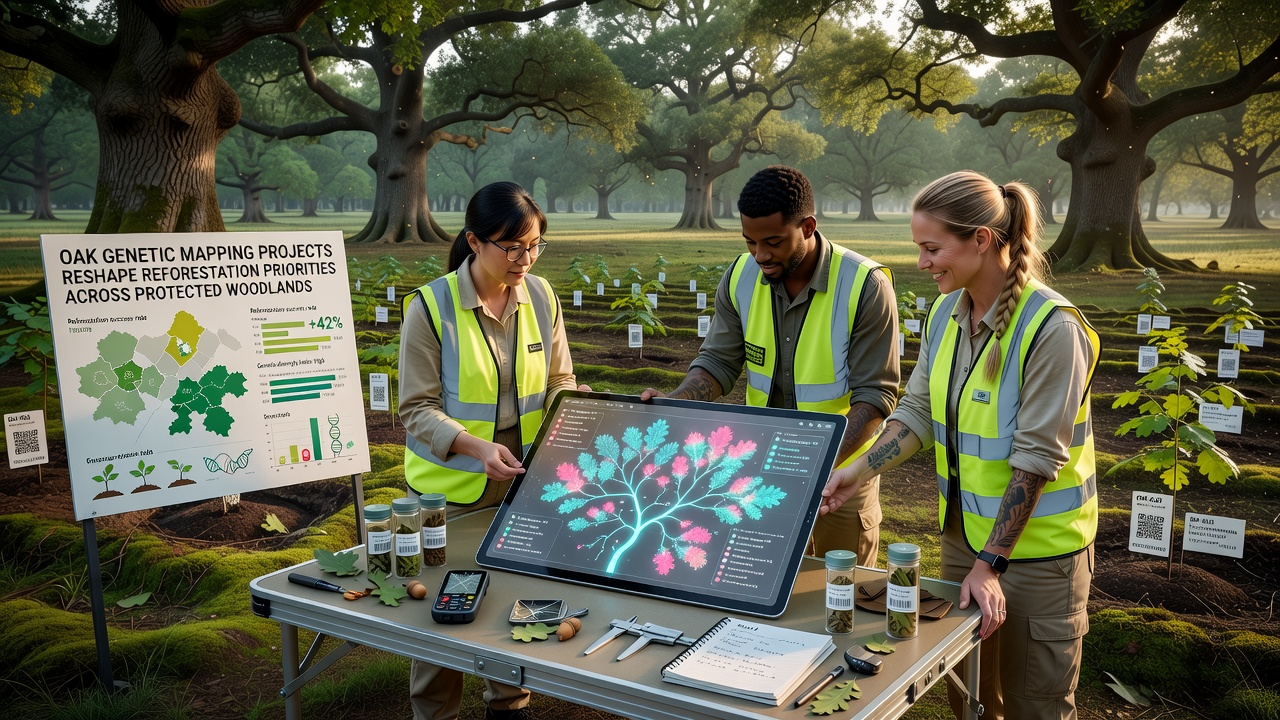
Genetic mapping initiatives focused on oak species have expanded rapidly in recent years, and forestry teams now use detailed genomic data to guide replanting decisions inside protected woodlands across North America and Europe. These projects sequence DNA from thousands of individual trees, then compare markers for drought tolerance, disease resistance, and local adaptation before any new saplings enter the ground.
Protected areas such as national forests and nature reserves have traditionally relied on broad geographic seed zones when selecting planting stock, yet newer mapping programs reveal that even trees growing a few kilometers apart can carry distinct genetic profiles. Data collected through these efforts show higher survival rates when managers match seedlings to specific micro-site conditions identified by genetic markers rather than relying solely on elevation or latitude.
Key Mapping Techniques and Data Collection
Teams collect leaf samples from mature oaks during spring and summer campaigns, then extract DNA for whole-genome sequencing or targeted SNP panels that highlight adaptive traits. One study coordinated by researchers at several universities processed over 12,000 samples from white oak and red oak populations, producing maps that identify clusters with elevated resistance to oak wilt and sudden oak death.
Remote sensing tools combine with ground surveys so that canopy health indicators align with the genetic datasets, and this integration allows managers to flag stands where genetic diversity has narrowed due to past selective logging or disease outbreaks. Figures released in 2025 indicate that roughly 18 percent of sampled protected woodlands now carry reduced heterozygosity compared with historical baselines derived from herbarium specimens.
Shifting Reforestation Priorities
Once genetic maps become available, agencies adjust planting lists to favor genotypes predicted to perform well under projected climate scenarios for 2050 and beyond. In several Midwestern reserves, managers have deferred broad-scale planting until additional mapping clarifies which local provenances best match future temperature and precipitation patterns, and similar pauses have occurred in parts of the UK and France.
November 2026 will mark the release of an updated continental oak atlas compiled from ongoing projects, and that dataset is expected to refine seed transfer guidelines for protected sites on both sides of the Atlantic. Preliminary summaries already suggest that certain southern genotypes may gain priority for northern reserves because they carry alleles linked to longer growing seasons.
Regional Examples and Outcomes
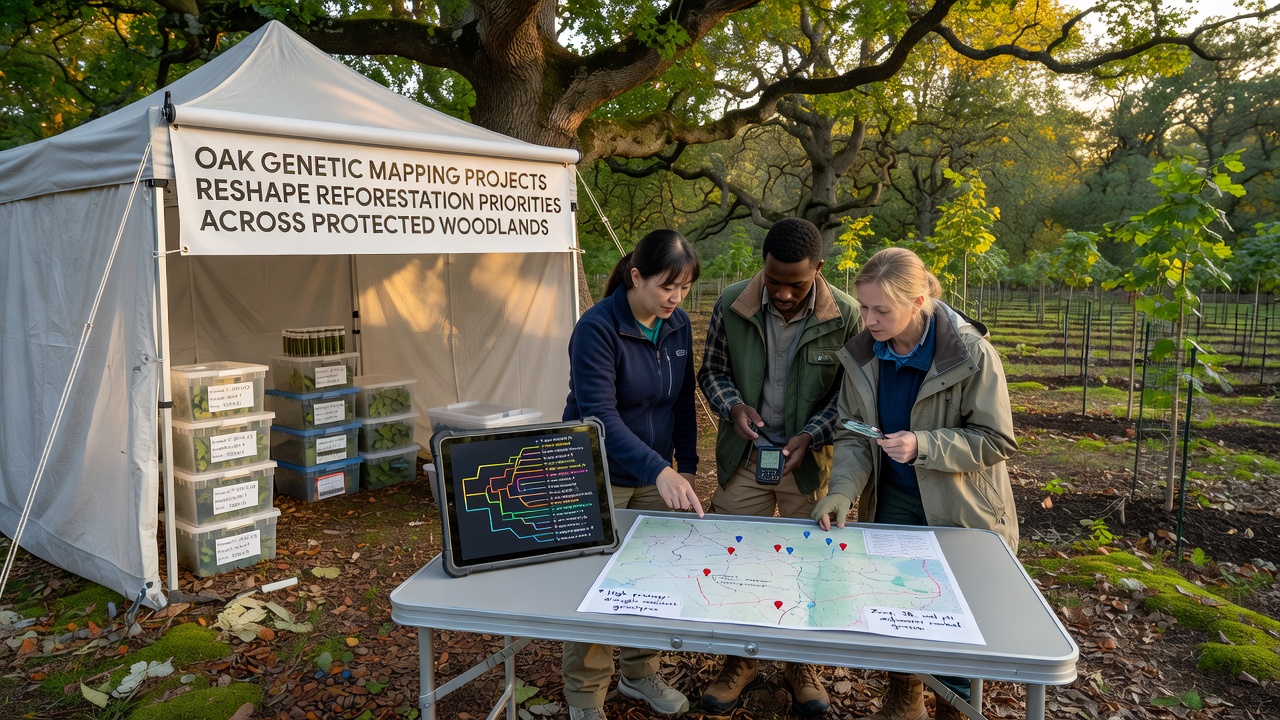
In the Appalachian region, genetic surveys identified three distinct lineages within northern red oak that occupy different slope aspects, and reforestation crews have begun sourcing acorns from all three lineages to maintain diversity within restoration plots. Across the border in Ontario, Natural Resources Canada staff used similar mapping to revise seed collection permits so that only verified high-diversity stands supply material for nearby protected areas.
European partners working through the European Forest Institute have mapped sessile oak stands in the Pyrenees and Carpathians, revealing hybrid zones where genetic mixing produces individuals with improved frost hardiness. Those findings prompted revised reforestation protocols that require mixed-origin plantings rather than single-provenance blocks in several nature reserves.
Observers note that funding for these mapping efforts now comes from both government allocations and private conservation foundations, and the combined resources have accelerated the pace of sampling campaigns. Budget reports from 2024 show an average increase of 27 percent in annual expenditures on oak genomics compared with five years earlier.
Challenges in Implementation
Although the mapping data provide clearer priorities, logistical hurdles remain when scaling up nursery production of genetically matched stock. Nurseries must maintain separate seed lots for each identified genotype cluster, and this requirement raises costs while demanding tighter tracking systems from collection through outplanting. Some protected woodland managers report delays of two to three years while new propagation protocols are developed.
Legal frameworks governing seed movement between jurisdictions also require updates, because older regulations were written without reference to genomic data. Discussions among federal and state agencies continue on how to incorporate genetic distance thresholds into permitting processes without creating excessive administrative burdens.
Conclusion
Oak genetic mapping projects continue to supply detailed information that alters reforestation sequences inside protected woodlands, and the upcoming November 2026 atlas release will likely accelerate those adjustments. Managers now weigh genomic profiles alongside traditional site factors when deciding which seedlings to plant, while nurseries and regulators adapt their systems to accommodate the new data streams. Continued sampling and analysis will determine how quickly these revised priorities translate into measurable changes in woodland composition and resilience.