Paul Foster · 7 September 2026
Oak Trade Routes and Pollen Records Reveal Shifting Regional Allergy Patterns
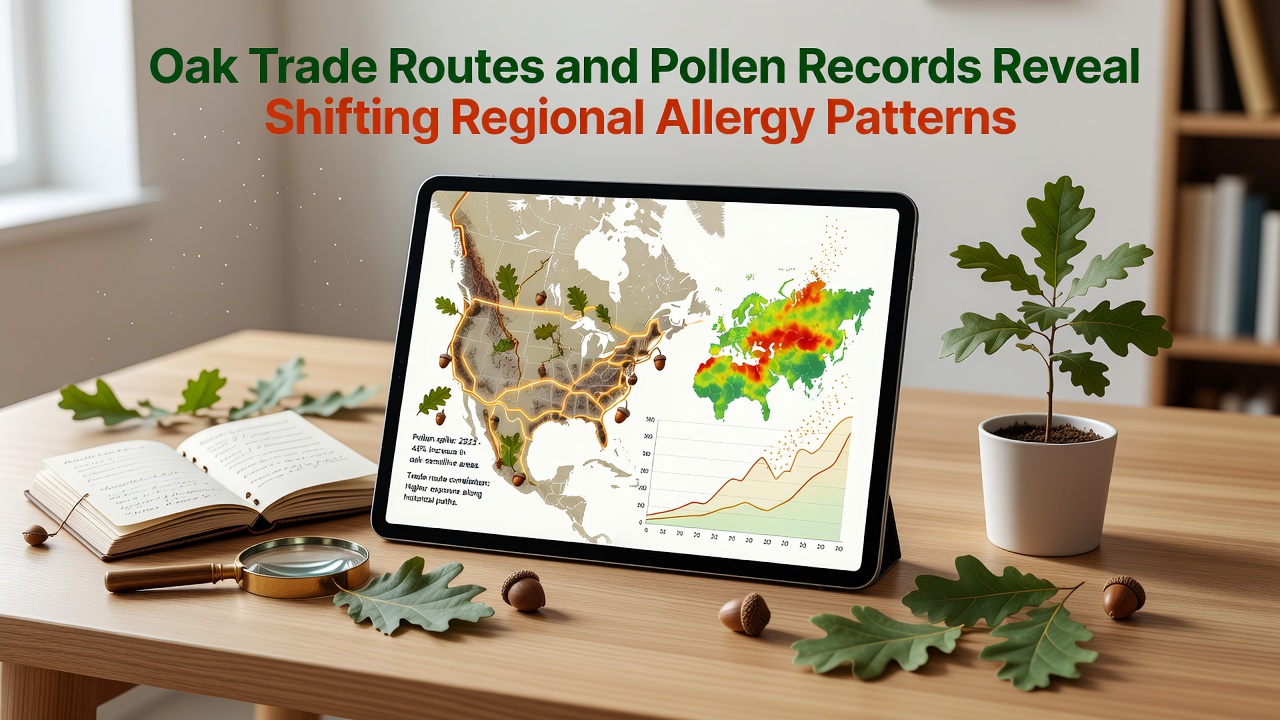
Pollen records extracted from lake sediments and peat bogs document how oak species distribution changed over centuries, and trade networks carried acorns, timber, and associated pollen far beyond native ranges. Researchers analyzing cores from multiple continents have traced spikes in Quercus pollen that align with documented shipping lanes and overland routes used for oak products between 1500 and 1900. These movements introduced new oak populations into regions where they had not grown previously, altering local pollen loads and contributing to measurable shifts in seasonal allergy reports.
Mapping Ancient and Early Modern Oak Exchange Networks
Archaeological finds and shipping manifests indicate that oak timber traveled from the Baltic ports to Mediterranean shipyards, while acorns moved along inland trails in North America as Indigenous groups and later European settlers exchanged seeds for construction and food. Data from the National Archives in the United States and comparable European collections show consistent volumes of oak exports from the 16th through 19th centuries, with peaks during naval expansion periods. Pollen diagrams from sediment layers deposited during those same intervals contain elevated oak percentages in areas distant from original oak habitats, demonstrating that human transport introduced viable populations that persisted and reproduced.
Scientific Methods Behind Pollen Reconstruction
Palynologists count microscopic grains preserved in annual sediment layers, then apply radiocarbon and lead-isotope dating to establish timelines. When oak pollen percentages rise sharply in cores from regions without prior oak forests, the timing often coincides with known trade events rather than natural migration rates. Studies published through the U.S. Geological Survey and collaborating institutions in Canada and Australia have cross-referenced these counts with historical records of oak planting along trade corridors, confirming that introduced stands produced detectable pollen within one or two generations. This correlation allows researchers to distinguish between climate-driven range shifts and those accelerated by commerce.
Regional Allergy Data and Pollen Load Changes
Medical records from the early 20th century onward reveal increased reports of oak pollen sensitivity in cities located along former trade routes. Government health agencies in North America and Europe track allergen counts through networks of air samplers, and long-term datasets show that areas receiving oak introductions in the 1700s and 1800s now experience earlier and longer oak pollen seasons compared with nearby regions that lacked such trade connections. Figures from the Centers for Disease Control and Prevention indicate that oak ranks among the top tree allergens in parts of the eastern United States, while comparable monitoring stations in western regions without historical oak trade show lower oak pollen contributions. Researchers note that wind dispersal from planted stands along old port cities and river trade hubs continues to influence contemporary counts.
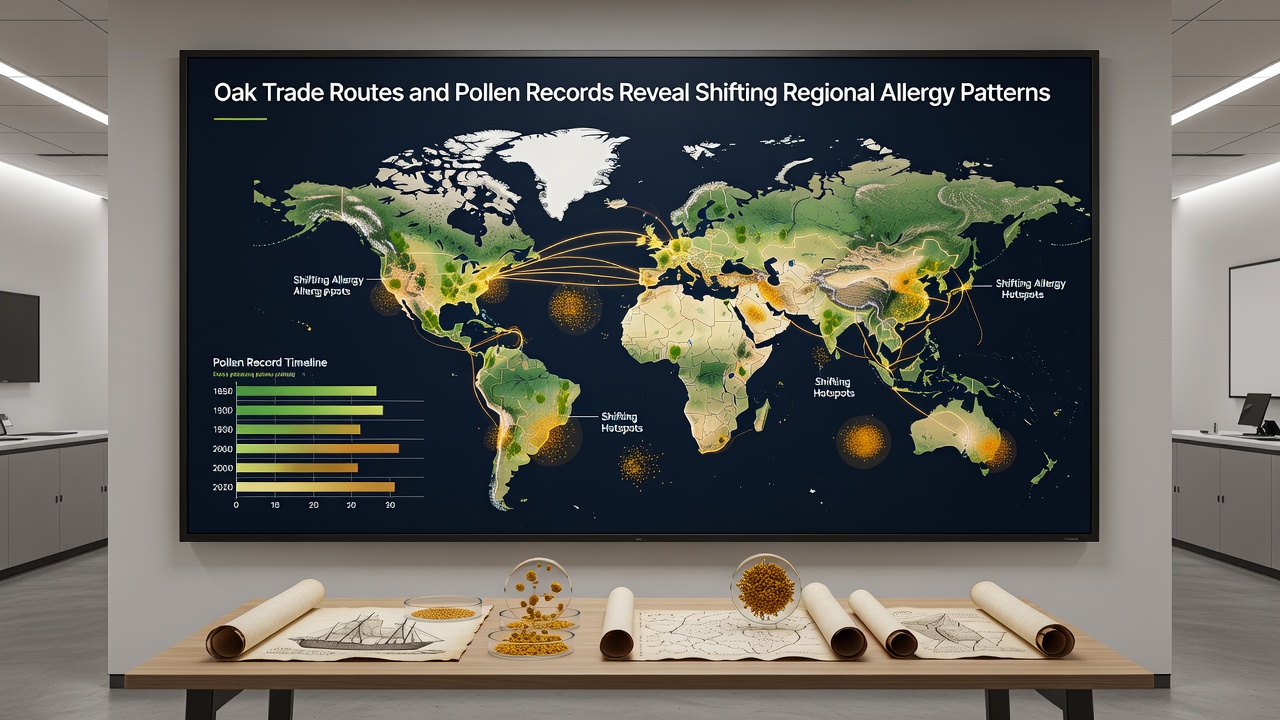
Climate variability adds another layer. Warmer spring temperatures in recent decades have advanced flowering dates for both native and introduced oaks, extending the overlap between oak and grass pollen seasons in several metropolitan areas. Data compiled by Environment and Climate Change Canada demonstrate that cities with documented 19th-century oak imports display a 12-to-18-day advance in peak oak pollen compared with reference sites lacking that history. These patterns emerge consistently across multiple datasets, underscoring the lasting imprint of trade routes on modern aeroallergen profiles.
September 2026 Research Developments
In September 2026, an international workshop hosted by the European Pollen Database and North American partners will release updated synthesis maps integrating new cores from the Great Lakes and Baltic regions. Preliminary results shared ahead of the meeting indicate that oak pollen influx from trade-introduced populations accounts for up to 30 percent of total oak pollen at certain monitoring stations in the northeastern United States and parts of Scandinavia. The workshop will also present refined models that separate trade-related introductions from post-glacial recolonization, providing clearer baselines for future allergy forecasting. Health agencies plan to incorporate these refined maps into regional pollen alerts beginning in the 2027 season.
Conclusion
Pollen records combined with historical trade documentation establish a direct link between centuries-old oak exchange networks and present-day regional differences in oak pollen exposure. Continued monitoring through established government and academic networks will track how these legacy populations respond to ongoing climate shifts, supplying data that supports more precise allergy management across affected regions.